
COMPANY NEWS · OEM LED bulb sample process
From Buyer Requirements to an Approved LED Bulb Sample
An OEM LED bulb sample is approved when the buyer has tested the specified model and its controls, reviewed the selling-unit contents and recorded the accepted version in writing. The process begins with requirements and a proposed product, then a quotation and sample plan. Changes after testing require a deliberate review before bulk production.Local preview · November 12, 2026 · Shieldaily Editorial Team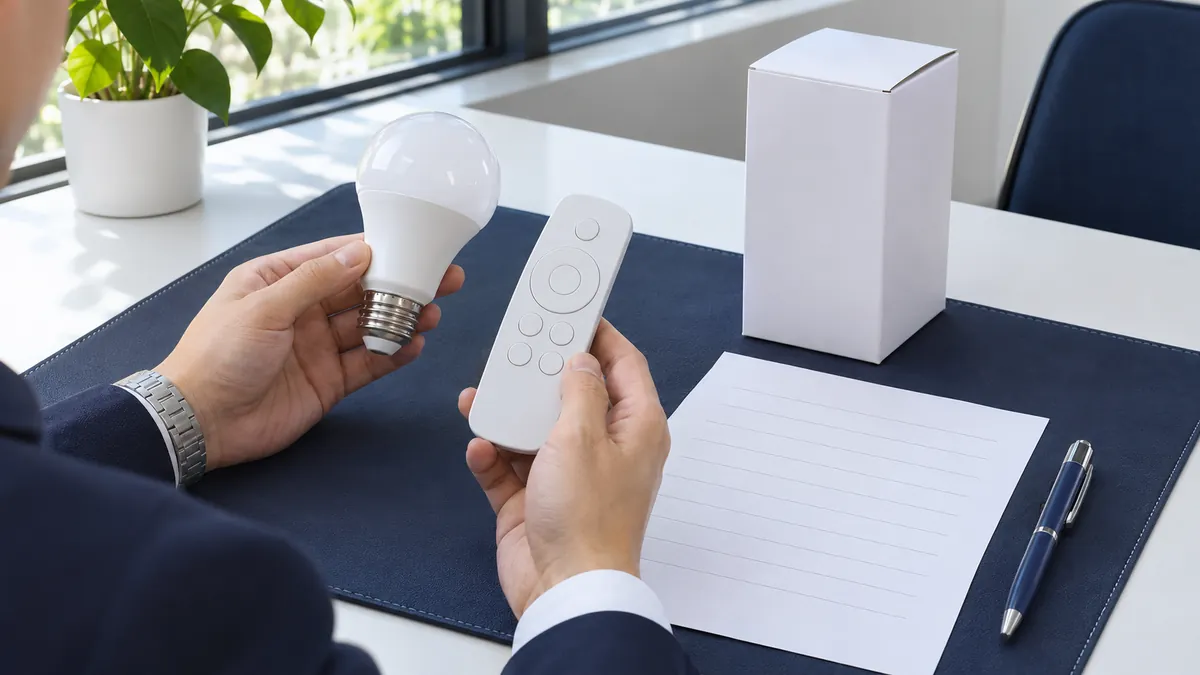
A sample is the point where a product idea becomes observable, but only if both teams know what the sample is meant to prove. Requirements, commercial scope and technical conditions should be recorded before it is prepared.
The buyer then tests the product in a representative fitting or network and notes discrepancies. This article describes a workable process rather than claiming that every project uses a fixed number of samples or a standard development time. The buyer's acceptance criteria should be agreed before a sample is prepared, not invented after it arrives.
Requirements
The buyer supplies the destination, product role, fitting, light output, control requirements, quantity and packaging direction. Separate essential from optional functions. A replacement product may also need a drawing or physical reference. This first record prevents later sample discussion from drifting toward an attractive but unsuitable model.
Related buyer guide: Sample approval checklist
Product Recommendation
Compare available bulb or downlight formats with the brief. A recommendation should identify the candidate model and what still needs verification, such as dimmer compatibility or app availability. If several products could work, explain the trade-offs rather than presenting them as interchangeable.
Technical Review
A new function, housing, remote logic or driver request may need assessment before a sample is promised. Confirm which changes are available options and which could affect tooling, MOQ, cost or lead time. The buyer should know whether the first sample represents a standard model or a proposed modification.
Quotation
Price the defined product, controller and selling unit at the requested quantity. State sample terms and any assumptions that remain open. A quotation for a bare bulb should not be confused with a retail-ready set. The buyer can then decide which configuration is worth testing.
Sample Configuration
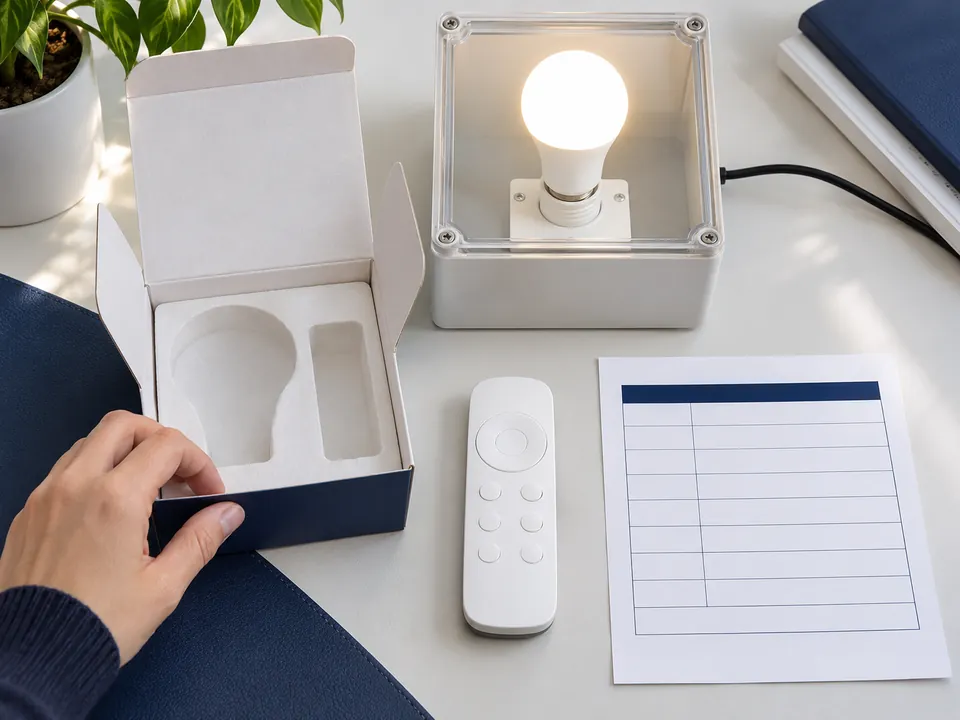
Record the bulb, electrical rating, controller, firmware where relevant, intended pack contents and any temporary substitutions. Label the sample so the buyer can compare it with the quotation. A temporary plain box may allow function testing but does not approve final private-label artwork.
Explore customisation: OEM programme
Sample Preparation
Prepare the agreed combination and provide the information needed to test it. For a remote bulb this includes pairing steps; for a smart bulb, app and network requirements; for an emergency bulb, charging and switch instructions. The sample should represent the chosen configuration as closely as practical, with exceptions called out.
Buyer Testing
Use the intended fitting, controller, circuit or network. Check light, physical fit, every required function and restart behaviour. Count the accessories and read the instructions as a customer would. Record the conditions and any issue so it can be reproduced rather than merely stating that the sample failed.
Revisions
Identify what changed, why and which tests must be repeated. A replacement driver, remote or firmware can alter operation; new artwork can alter customer claims. Review commercial effects before agreeing to another sample. Do not treat the earlier approval as covering a changed product automatically.
Written Approval
Approve the final model, sample version, functions, dimensions, selling-unit contents, labels and artwork in a written record. Include any permitted variation or agreed inspection point. This gives both sides a usable reference for the production order.
Compare product options: Product categories
Bulk-Order Specification
Carry the approved information into the purchase order and production handover. Keep the sample reference available for batch checks and repeat orders. If a later order differs, identify it as a new revision rather than silently replacing the earlier specification.
When your brief is ready: Start a sample brief
FAQ
Frequently asked questions
Is the first sample always the final version?
No. It is a test of the agreed configuration; any material difference should be resolved and retested before approval.Can plain sample packaging approve a branded retail pack?
No. Product-function and final-artwork approvals are separate when the sample pack is temporary.What should a buyer record after testing?
Record the model, controller, conditions, observed functions, discrepancies and accepted changes. This supports a clear final specification.Why keep an approved sample reference?
It gives both sides a physical and written comparison point for production, inspection and repeat orders.RELATED RESOURCES
Continue your product review
How Retail and E-commerce Are Changing LED Bulb Packaging
Compare protection, single and multi-packs, control instructions, barcodes, languages and shipping needs for retail and online LED bulb sales.Read articleWhat Can Be Customised in an OEM LED Bulb Order?
Separate existing LED bulb options, private-label packaging and requests requiring technical evaluation before an OEM quotation.Read articleHow Private-Label LED Bulb Packaging Is Prepared
Define brand files, product labels, barcode, box, manual, carton and exact selling-unit contents before approving private-label packaging.Read articleHAVE A PRODUCT IN MIND?
Send Your Product and Order Brief
Share the selected product, required functions, quantity and packaging scope so the next sample or quotation step can be discussed.