
KNOWLEDGE · lumens vs watts LED bulb
Lumens vs Watts: How to Compare LED Bulb Brightness
Watts measure electrical power; lumens measure light output. Compare bulbs by their lumen figures for the same intended use, then check watts and lumens per watt for efficiency. Colour temperature, colour rendering and beam distribution can make equal-lumen bulbs look different, so confirm the result on a sample.Local preview · November 12, 2026 · Shieldaily Editorial Team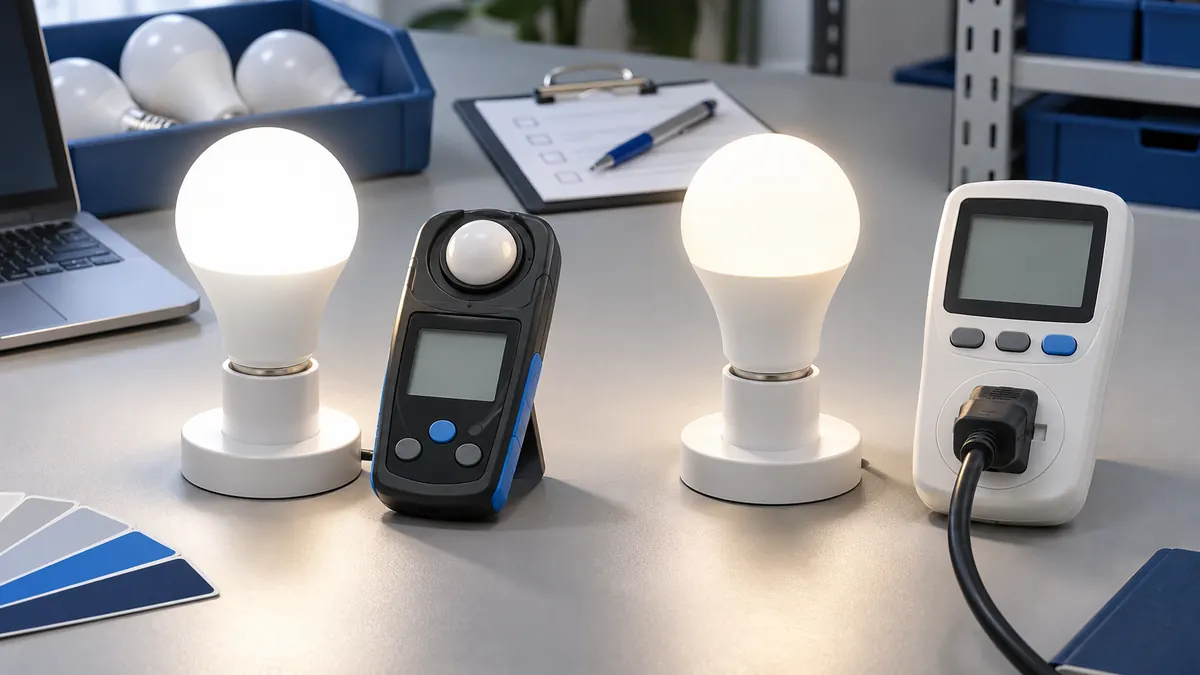
Buyers often ask for a 'brighter 9W bulb', but wattage cannot answer the brightness question by itself. Two 9W lamps may emit different amounts of light, and two bulbs with the same lumens may distribute it differently.
A wholesale comparison should state the target lumens, input format, colour and optical behaviour as well as power. Testing the candidate in the actual fitting is the practical check before a retail claim or volume purchase. This distinction matters when two suppliers quote different electrical inputs for a similar customer lighting task.
Watts Measure Power, Not Brightness
The watt figure describes how much electrical power the bulb consumes under stated conditions. It is useful for circuit planning, energy comparison and checking the offered model, but it does not tell the buyer how much light reaches a room. Avoid treating 'higher watts' as a substitute for a lumen target. Also check whether the watt value belongs to the exact voltage and control variant being quoted.
Related buyer guide: Colour temperature guide
Lumens Measure Light Output
A lumen figure expresses the light emitted by a source. Ask for the rated output of the complete bulb in the mode customers will use, not only a component LED value. RGB products may have different output in white and colour modes; emergency bulbs may differ between mains and backup operation. Compare like modes and verify the stated figure on the selected model's data.
What Lumens per Watt Tells Buyers
Dividing lumens by watts gives a simple efficacy ratio, but it is meaningful only when the figures describe the same complete product and test state. It can help compare similar bulbs, yet it does not settle colour, glare, dimming or reliability. Do not infer a market energy label from an informal calculation. For regulated markets, obtain the relevant model-specific performance and label information.
Compare the same lighting task
| Compare | Buyer check |
|---|---|
| Watts | Check electrical input after setting the required light output. |
| Lumens | Compare the complete bulb in the same operating mode. |
| Sample result | Look at the intended surface and beam distribution in the actual fitting. |
Compare product options: Browse LED bulb options
Why Equal-Wattage Bulbs May Look Different
Driver efficiency, LED arrangement, diffuser transmission and optical direction can vary. One bulb may illuminate a work surface more strongly while another spreads light broadly. Compare the beam or distribution relevant to the intended fitting. If a shade or recessed housing changes the result, test the bulb there instead of judging by a bare-lamp photograph.
How CCT, CRI and Optics Affect Perceived Brightness
Cooler white may appear crisper in some settings, while warmer white supports a softer ambience; neither changes the definition of lumens. CRI concerns colour appearance, not total output. Diffusers, reflectors and beam angle influence where light lands. Keep these attributes in the same comparison table so the buyer does not mistake a change in colour or direction for a change in emitted flux.
How to Compare Brightness on a Sample
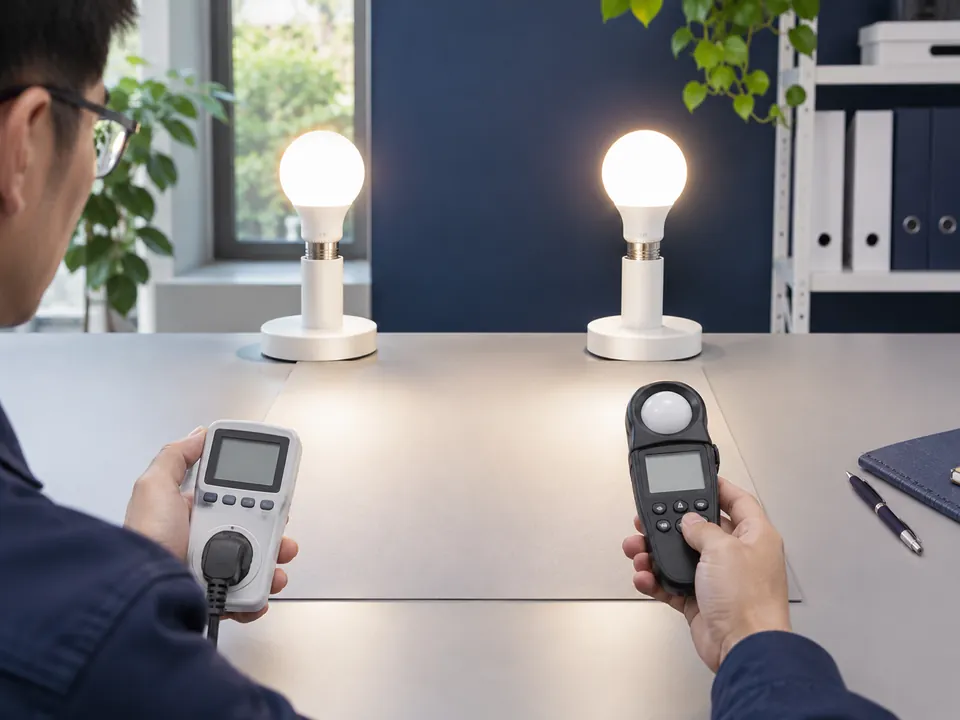
Test candidates at the same supply conditions and in the intended fixture. Use the same room, distance and control setting; allow for any normal start-up behaviour. Compare the task surface and surrounding space, and note whether dimming changes output smoothly. If measurement is required, agree a test method rather than relying on phone-camera exposure, which can make different bulbs look identical.
Related buyer guide: Wholesale selection guide
What Brightness Data Should Appear in a Quotation
Record rated lumens, watts, CCT, CRI where specified, beam information where relevant, input voltage and the model identifier. If the offer includes different modes, identify the mode to which the output applies. Ask for a sample matching the quoted data and keep that reference with the order. This makes later comparisons and customer-facing descriptions more reliable.
FAQ
Frequently asked questions
Does a higher-wattage LED bulb always give more light?
No. Compare rated lumens for the offered complete bulbs. Wattage only describes power consumption.Can I use lm/W to choose the best bulb?
Use it as one efficiency comparison for similar products, not as the sole decision. Check colour, optics, controls and the actual installation result.Why do two equal-lumen bulbs look different?
Their colour temperature, diffuser and beam distribution can change how light appears in a room. Test both in the same fitting and conditions.Which lumen figure belongs on an RGB bulb quotation?
State the mode to which the figure applies, particularly when white and colour modes differ. Use the selected model's information and sample.RELATED RESOURCES
Continue your product review
E26 vs E27 vs B22 vs E14: LED Bulb Base Guide
Compare screw, bayonet and specialist LED bulb bases, then check voltage, physical fit, labels and sample compatibility for your market.Read articleLED Bulb Sample Approval Checklist Before Bulk Production
A complete sample sign-off guide covering identity, light, controls, dimensions, packaging, written specifications and change control.Read articleHow Shieldaily Prepares LED Products for Different Markets
Build a market-specific bulb brief around electrical fit, labels, packaging, software and sample tests.Read articleHAVE A PRODUCT IN MIND?
Discuss Your LED Bulb Requirements
Share your market, selected product, required functions, quantity and packaging needs so the exact configuration can be reviewed for a quotation.