
COMPANY NEWS · LED bulbs for different markets
How Shieldaily Prepares LED Products for Different Markets
LED bulbs for different markets need more than a change of plug or box language. Start with the destination, supply voltage and frequency, lamp base, lighting preferences and sales channel. Then verify labels, applicable documentation, smart-product setup and the final sample for that exact market. Shieldaily reviews these requirements against the selected product rather than assuming one version suits every country.Local preview · November 12, 2026 · Shieldaily Editorial Team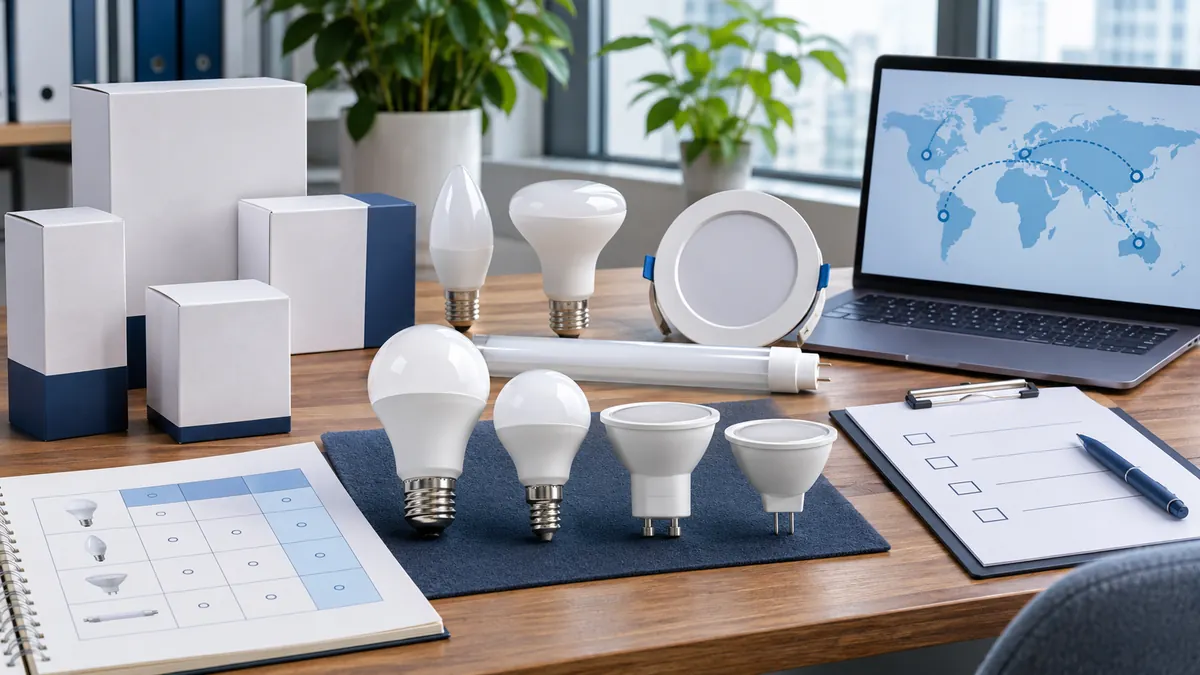
A distributor may want the same visual product in several destinations, but the version sold to each market may need a different base, electrical rating, printed material or app experience.
The practical way to prepare a range is to create one requirements sheet for each market and confirm which existing model can meet it. That sheet also guides quotation, sample testing and artwork approval. A photograph of a bulb should never stand in for its rating label or market-specific documentation.
Destination Market
State the country and sales channel. A retail box, online listing and project supply may need different information and pack contents. Identify who imports the product and what information they need for their own review.
Related buyer guide: Wholesale selection guide
Voltage and Frequency
Provide the local supply format and check it against the exact variant's rating label. Similar-looking bulbs can have different drivers. Confirm the electrical version on a sample before approving a multi-market catalogue.
Lamp Base
Confirm the fitting in the customer's installation. E26, E27, B22 and E14 are distinct choices, and GU10 or MR16 may require a different product format. Test the physical fit, not only the base name.
Brightness and Colour Preferences
Choose useful lumen output, colour temperature, colour rendering and control behaviour for the channel. A hotel warm-white brief may differ from a work area or retail display. Compare actual samples under the intended conditions.
Packaging Language
Specify the language of operating, pairing and safety information. Instructions for a remote, app or emergency function must match the supplied hardware and be understandable to the buyer's end user.
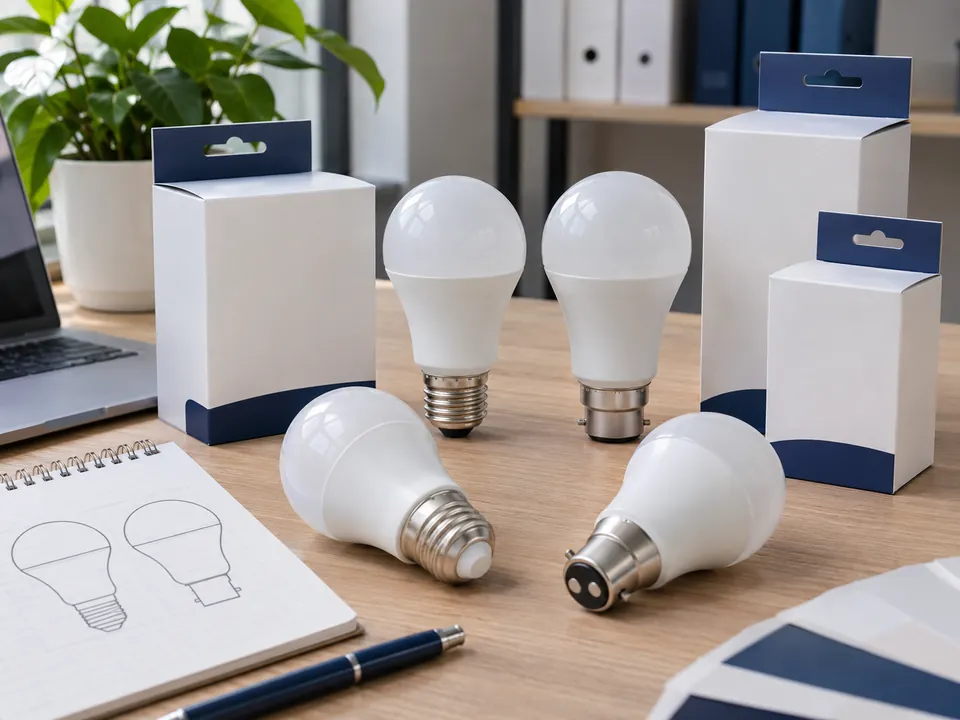
Compare product options: Product families
Product Labels
Check model identity, electrical rating, base, traceability and any required marks on the selected variant. Box artwork and the product label should describe the same configuration. Do not copy a label from another destination without review.
Compliance Requirements
Ask for the documents relevant to the product and market, then review their model scope and current status. A general claim such as 'CE' does not answer which rules apply to a smart, emergency or basic lamp.
Smart-Product Software Requirements
For an app bulb, test pairing, reset, language, network setup and any claimed ecosystem support in the destination. Software and hardware versions matter; do not assume one smart model works with every router or platform.
Sample Testing
Use the actual base, voltage version, controller, pack and manual planned for sale. Test light, controls and restart, then check printed information. Record the approved combination for each destination.
Explore customisation: OEM/ODM options
Why One Product Does Not Fit Every Market
A shared housing can support different variants, but electrical, control, label and documentation needs may diverge. Keep a market-by-market specification and quote so later repeat orders use the right version.
FAQ
Frequently asked questions
Can one bulb SKU serve every country?
No. Confirm its voltage, base, labels and applicable requirements for each destination.Is changing the box language enough?
No. The product rating, instructions, control setup and documents also need review.Should buyers request a separate sample for each market?
Yes, where the electrical or control variant differs. Test the exact version planned for sale.What information starts a multi-market quote?
Send each destination, supply format, base, product functions, quantity and packaging language.RELATED RESOURCES
Continue your product review
Lumens vs Watts: How to Compare LED Bulb Brightness
Understand the difference between power and light output, compare lm/W fairly, and test perceived LED bulb brightness before a bulk order.Read articleE26 vs E27 vs B22 vs E14: LED Bulb Base Guide
Compare screw, bayonet and specialist LED bulb bases, then check voltage, physical fit, labels and sample compatibility for your market.Read articleWarm White vs Cool White: Choosing LED Colour Temperature
Use LED colour temperature, colour rendering and sample comparison to choose suitable white light for homes, hotels and retail spaces.Read articleHAVE A PRODUCT IN MIND?
Send Your Product and Order Brief
Share the selected product, required functions, quantity and packaging scope so the next sample or quotation step can be discussed.