
INDUSTRY NEWS · LED lighting energy efficiency
LED Efficiency Is Moving Beyond Wattage Reduction
A lower wattage is useful only if the product still delivers the required light in the intended setting. Compare complete-lamp lumens per watt, optical distribution, driver behaviour and control settings under comparable conditions. Review lifetime and thermal evidence for the selected model rather than treating one efficiency number as a complete quality score.Local preview · November 12, 2026 · Shieldaily Editorial Team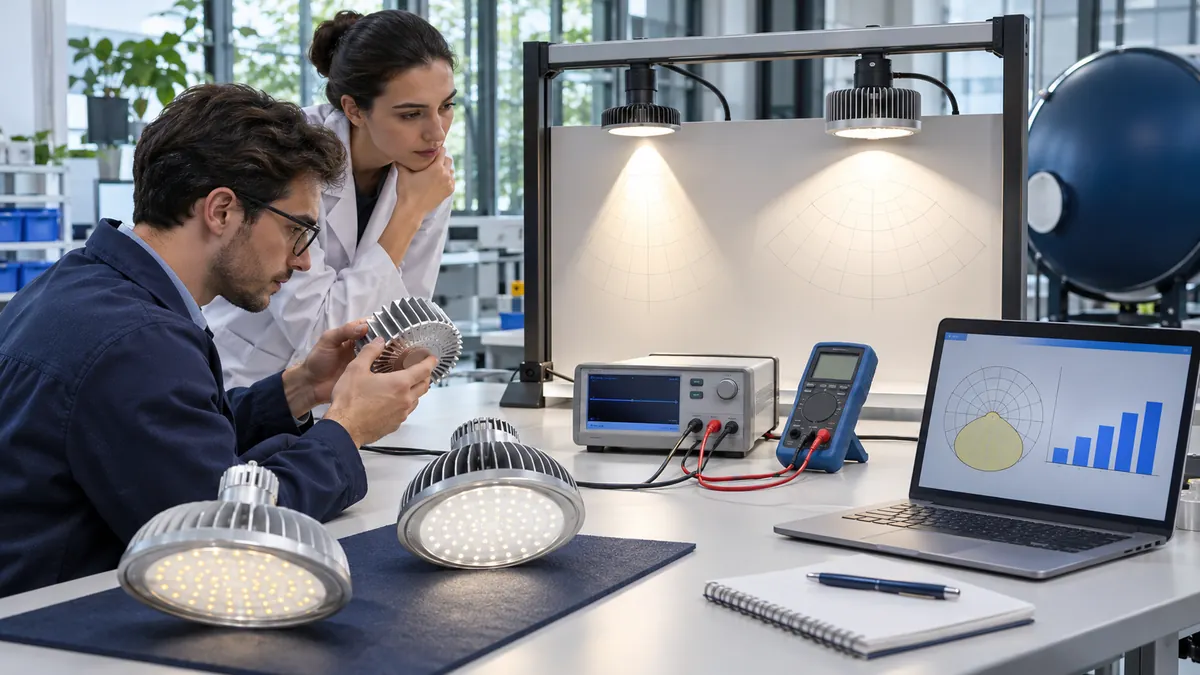
Early LED replacement discussions often centred on saving power compared with older lamps. Buyers now need a fuller comparison: the amount of useful light, how it is directed, whether dimming works and how the product behaves over time.
These factors can change the customer outcome even when two products carry the same nominal watts. Build a specification around the lighting task first, then evaluate energy use and evidence for the actual model. For a fair comparison, keep light output, operating mode and the intended fitting consistent across candidates.
From Wattage Reduction to System Performance
Wattage is an electrical input, not a guarantee that the desired surface is lit well. Define the space and target output before comparing products. A lamp with less power but poor beam placement may require a different fixture layout. Compare complete bulbs rather than LED components alone, and record the test mode in which each figure applies.
Related buyer guide: Lumens versus watts
Why lm/W Matters
Lumens per watt describes how much emitted light accompanies electrical input under stated conditions. It is useful when comparing similar complete products, but it does not measure glare, colour, beam quality or long-term output. Ask whether the lumen and watt figures come from the same model and mode. Regulatory labels may use their own required methods and should not be inferred from a simple ratio.
Driver and Thermal Performance
The driver converts supply power to the form the LEDs use, while thermal design helps components operate within their intended conditions. Poor interaction with a dimmer or an enclosed fitting can matter more to the customer than a small efficiency difference. Request the applicable model data and test the lamp in the planned installation.
Optics and Useful Light Output
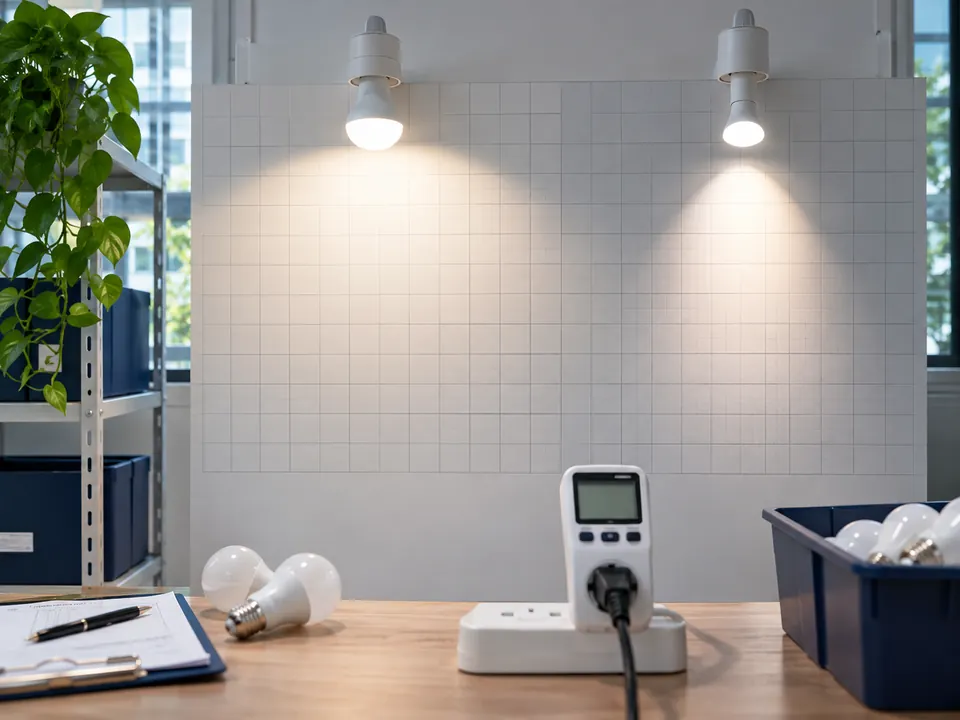
A broad bulb and a directional spotlight can have similar total lumens but illuminate a task differently. Check beam angle or distribution, shade effects and fixture geometry where relevant. In a downlight project, compare the installed result rather than only the bare product output. Use a sample to judge whether the light reaches the intended area.
Compare product options: Downlight range
Controls and Dimming
A control system can reduce output when full light is unnecessary, but savings depend on actual use. Check whether the selected bulb dims smoothly with the planned controller and whether low settings are stable. Do not invent a savings percentage from the existence of a dimming feature. For connected products, include the software and setup needs in the evaluation.
Lifetime Performance
A lifetime claim requires a defined basis and operating assumptions. Compare the stated conditions, warranty terms and any available performance evidence for the exact model. Heat, cycling and control compatibility can influence experience. Buyers should not convert a nominal lifetime into a guaranteed period without understanding the application.
Avoiding Over-Lighting
Specifying more lumens than the room needs can waste power and create an uncomfortable result. Establish the intended task, mounting height and desired ambience, then choose output and beam accordingly. Dimming may help, but it is not a substitute for selecting a suitable baseline product. Sample the proposed arrangement before finalising quantity.
Plan the market or application: Commercial solution
Comparing Similar Products Fairly
Use the same voltage, CCT, control state and measurement scope when comparing two bulbs. Put lumens, watts, CRI, beam, dimming behaviour and product evidence in one table. If one offer includes different accessories or packaging, separate that commercial difference from the lighting comparison. Approve the complete selected SKU in writing.
FAQ
Frequently asked questions
Is the lowest-wattage bulb always most efficient?
No. Compare emitted and useful light as well as input power for the same application.Does a higher lm/W number guarantee a better installation?
No. Beam, glare, colour and fixture fit can still make another product more suitable.Can dimming savings be claimed from a feature list?
No. Savings depend on actual operation and require an appropriate method to estimate or measure.Why check thermal conditions?
Heat can affect driver and LED operation. Test or review the selected model in the intended fitting, particularly where ventilation is limited.RELATED RESOURCES
Continue your product review
The Next Stage of LED Lighting: Smarter, More Efficient and Longer-Lasting
An evidence-conscious look at LED product direction: useful efficiency, controls, reliability, packaging and how buyers should compare ranges.Read articleWhat EU Light-Source Rules Mean for LED Bulb Importers
A buyer-oriented overview of EU light-source ecodesign, energy labels, EPREL and the separate checks needed for CE, RoHS and radio products.Read articleLED Lighting Opportunities Across Emerging Markets
A market-by-market purchasing framework for voltage, bases, control complexity, pricing, packaging language and sample-led range building.Read articleHAVE A PRODUCT IN MIND?
Discuss the Requirement for Your Market
Tell us the destination market, product type and question raised by this topic. We can review a relevant model and the information needed for your buying decision.